All Stories

INVESTIGATION THE HISTORY AND CONSEQUENCES OF PAST RESTORATION INTERVENTIONS ON FRESCOS – THE CASE OF BAROQUE PAINTINGS OF GIULIO QUAGLIO IN LJUBLJANA

INVESTIGATION THE HISTORY AND CONSEQUENCES OF PAST RESTORATION INTERVENTIONS ON FRESCOS – THE CASE OF BAROQUE PAINTINGS OF GIULIO QUAGLIO IN LJUBLJANA

Mateja Neža Sitar*
* Institute for the Protection of Cultural Heritage of Slovenia, Restoration centre in Ljubljana, Slovenia (Questo indirizzo email è protetto dagli spambots. È necessario abilitare JavaScript per vederlo.)

Abstract 
One of the most illustrative example of negative consequences of past restoration interventions we can observe on the unique self-portrait of the baroque painter Giulio Quaglio from Laino near Como, Italy. He painted himself on the 1st of July in 1704 on the right wall in the presbytery of Cathedral of St Nicholas in Ljubljana, Slovenia. The paper is going to present interesting examples, demonstrating the nature of decay on wall and ceiling paintings and the consequences of unskilled and unprofessional restoration decisions and interventions in the past. With the mentioned subject we are going to present one part of the conservation-restoration project, executed in 2002-2006 by Restoration centre in Ljubljana under the Institute for the Protection of Cultural Heritage of Slovenia (IPCHS) as one of the most complex conservation restoration projects in Slovenia.
{flippingbook_book 35}
MESOAMERICAN MURAL PAINTINGS. PHYSICO-CHEMICAL CHARACTERIZATION OF MATERIALS AND APPLICATION OF CALCIUM HYDROXIDE NANOPARTICLES FOR CONSOLIDATION

MESOAMERICAN MURAL PAINTINGS. PHYSICO-CHEMICAL CHARACTERIZATION OF MATERIALS AND APPLICATION OF CALCIUM HYDROXIDE NANOPARTICLES FOR CONSOLIDATION

Lorenza Bernini* * C.S.G.I. University of Florence, Italy (Questo indirizzo email è protetto dagli spambots. È necessario abilitare JavaScript per vederlo.)

Abstract
Painting techniques, used by Mesoamerican people to make their murales in the pre-Columbian era, are partially unknown. In this study it was tried to improve the knowledge of these techniques. Pigments, dyes and mortars were analyzed and also the deterioration causes of the paintings were investigated. Painting samples from three archaeological sites were collected and analyzed using optical microscopy for the optic observations and FTIR spectroscopy to analyze the main compounds of paintings, both organic and inorganic, but also secondary compounds produced by deterioration processes. XRD was used to analyze inorganic pigments and SEMEDS to study cross-sections. The diagnostic was made with the aim to have a previous restoration before applying a consolidation treatment. This will make possible to accurately remove of the degradation process and to proceed with the consolidation treatment with hydroxide nanoparticles for the consolidation of painted surface.
{flippingbook_book 34}

IDENTIFICATION OF PROTEIN CONTENT IN THE GYPSUM PAINTING SUPPORT BY FTIR SPECTROSCOPY, PCA AND NEURAL NETWORK

IDENTIFICATION OF PROTEIN CONTENT IN THE GYPSUM PAINTING SUPPORT BY FTIR SPECTROSCOPY, PCA AND NEURAL NETWORK

Elena Rogoz*, Olimpia-Hinamatsuri Barbu**

* National University of Arts, Department of Conservation – Restoration, Bucharest, Romania; graduate student (Questo indirizzo email è protetto dagli spambots. È necessario abilitare JavaScript per vederlo.
** Romanian National History Museum, Centre of Research and Scientific Investigation, Bucharest, Romania; researcher (Questo indirizzo email è protetto dagli spambots. È necessario abilitare JavaScript per vederlo.)

Abstract
This paper presents the advantages of using principal component analysis (PCA) and neural network (NN) to the Fourier transform infrared (FTIR) data for identifying the protein content in the painting support. We selected for PCA the region between 1500 and 1750 cm-1 of the FTIR spectra. The determination of protein concentration is based on the characteristic amido I and amido II absorption bands. In order to quantify the protein content in the painting support of two Romanian wooden churches (18th c.), we prepared fifteenconcentrations of glue mixed with the gypsum mortar. Neural network was used for predicting the protein concentration in the unknown samples, using as inputs the FTIR-PCA data of the first five components.
{flippingbook_book 33}

SPECTROSCOPY STUDIES ON CONSERVATION ISSUES IN MODERN AND CONTEMPORARY ART PAINTINGS

SPECTROSCOPY STUDIES ON CONSERVATION ISSUES IN MODERN AND CONTEMPORARY ART PAINTINGS

Joana Domingues*, Francesca Rosi**, Grazia De Cesare***, Costanza Miliani**** * Faculdade de Ciências e Tecnologia, Universidade Nova de Lisboa, Lisboa, Portugal (Questo indirizzo email è protetto dagli spambots. È necessario abilitare JavaScript per vederlo.) ** SMAArt - Scientific Methodologies Applied to Archaeology and Art, University of Perugia, Italy (Questo indirizzo email è protetto dagli spambots. È necessario abilitare JavaScript per vederlo.) *** Istituto Superiore per la conservazione ed il restauro, Roma, Italy (Questo indirizzo email è protetto dagli spambots. È necessario abilitare JavaScript per vederlo.) **** National Research Council, Institute for Molecular Science and Technology CNR-ISTM, Perugia, Italy (Questo indirizzo email è protetto dagli spambots. È necessario abilitare JavaScript per vederlo.)

Abstract
In the present work conservation issues on laser cleaning of modern and contemporary painting are studied in order to assist the conservator’s work in choosing right cleaning methodologies. Therefore, an analytical method is presented using micro-FTIR and micro-Raman assisted with optical microscopy on mock-ups with different commercial paint formulations, over which several laser cleaning parameters were applied. Recognizing the importance of in situ analyses, correspondent portable equipments were also covered. Some alterations phases could be found, mainly by binder degradation, and the titanium white pigment showed significant alteration in the Raman spectra.
{flippingbook_book 32}

GREEN PIGMENTS: TRADITION AND MODERNITY IN PAINTING ACCORDING TO PORTUGUESE 19TH CENTURY TECHNICAL LITERATURE

GREEN PIGMENTS: TRADITION AND MODERNITY IN PAINTING ACCORDING TO PORTUGUESE 19TH CENTURY TECHNICAL LITERATURE

Sónia Barros dos Santos*, António João Cruz*,* ** Portuguese Catholic University, Oporto, Portugal, Questo indirizzo email è protetto dagli spambots. È necessario abilitare JavaScript per vederlo. ** Polytechnic Institute of Tomar, Portugal, Questo indirizzo email è protetto dagli spambots. È necessario abilitare JavaScript per vederlo.

Abstract 
The massive industrialization of the nineteenth century societies together with breakthroughs in Chemistry such as the discovery of new elements and compounds, allowed the production of new pigments. In this process, many new synthetic green pigments were added to the painter’s palette. There is a significant lack of information of how the spreading of these products occurred in peripheral countries in Europe. Based in technical literature published in Portugal between 1788 and 1904 this study shows that there is in average a large gap between the discovery and the commercialization of new green colours and their first references in Portuguese technical literature.
{flippingbook_book 31}

ANALYTICAL CHARACTERIZATION OF PLASTERS AND STONES COMING FROM THE 19TH CENTURY PALAZZO FRAGAPANE IN GRAMMICHELE

ANALYTICAL CHARACTERIZATION OF PLASTERS AND STONES COMING FROM THE 19TH CENTURY PALAZZO FRAGAPANE IN GRAMMICHELE

Fernanda Cantone*, Enrico Ciliberto**, Enrico Greco**,
Salvatore La Delfa**, Gabriella Murgana*

* Faculty of Architecture, University of Catania, Italy 
** Department of Chemistry, University of Catania, Italy (Questo indirizzo email è protetto dagli spambots. È necessario abilitare JavaScript per vederlo., Questo indirizzo email è protetto dagli spambots. È necessario abilitare JavaScript per vederlo.)

Abstract
Plaster and stone samples coming from the 19th century Palazzo Fragapane in Grammichele (CT) were collected and characterized by using several microanalytical techniques such as X-ray Diffraction (XRD), Scanning Electron Microscopy (SEM), Energy Dispersive X-ray analysis (EDX), Fourier Transformed Infrared Spectroscopy (FT-IR). The Analytical investigations were addressed to investigate the microstructure and the composition of the different samples and to define the type and the level of the weathering in order to design the best procedures for the maintenance and conservation of the historical building.
{flippingbook_book 30}

ARTIFICIAL PATINA IN EXPERIMENTAL ARCHAEOLOGY

ARTIFICIAL PATINA IN EXPERIMENTAL ARCHAEOLOGY

Luigi Campanella*, Barbara De Filippo*, Daniela Ferro**,Stefano Natali***, Marcella Guiso*, Andrea Brotzu****

Dipartimento di Chimica, Università degli studi di Roma “La Sapienza”, P.le A. Moro 5 00185, Roma, Italia (Questo indirizzo email è protetto dagli spambots. È necessario abilitare JavaScript per vederlo.)** Consiglio Nazionale delle Ricerche, CNR-ISMN, Co Dipartimento di Chimica,P.le A. Moro 5, 00185 Roma, Italia*** Dipartimento di Ingegneria Chimica, Materiali, e Ambiente, Università degli studi di Roma“La Sapienza”, Via Eudossiana 18 00184, Roma, Italia

Abstract
Starting from non destructive colorimetric measurements on original dark patinated Greek and Roman Bronze Statues, physical chemistry investigations (SEM-EDS, XRD) have been carried out on as-patinated artificial specimens (Cu 88%w, Sn 12% w). The comparison between the colorimetric data obtained on archeological items and those obtained with laboratory methods, interpreted according to the ancient literatures, furnished important indication for the comprehension of the technology related to the dark patina realization.
{flippingbook_book 29}

SPECTROPHOTOMETRIC INVESTIGATIONS AT THE MUSEUM: MONITORING OF COLOUR CHANGES DURING DIFFERENTIATED CLEANING OF THE MARBLE STATUES

SPECTROPHOTOMETRIC INVESTIGATIONS AT THE MUSEUM: MONITORING OF COLOUR CHANGES DURING DIFFERENTIATED CLEANING OF THE MARBLE STATUES

Daria Francesca Alberghina*, Salvatore Schiavone**,
Fernanda Prestileo***, Ermanno Cacciatore***,
Lorella Pellegrino****, Donato Perrone***

* University of Palermo, Di.F.Te.R., Italy (Questo indirizzo email è protetto dagli spambots. È necessario abilitare JavaScript per vederlo.)
** University of Palermo, C.F.T.A. Department, Italy (Questo indirizzo email è protetto dagli spambots. È necessario abilitare JavaScript per vederlo.) *** Laboratory of Physics and Indoor Environment, Regional Center for Planning and Restoration, Sicilian Region, Italy (Questo indirizzo email è protetto dagli spambots. È necessario abilitare JavaScript per vederlo.) **** Laboratory of Restoration of Inorganic Materials, Regional Center for Planning and Restoration, Sicilian Region, Italy (Questo indirizzo email è protetto dagli spambots. È necessario abilitare JavaScript per vederlo.)

Abstract
The spectrophotometric investigations carried out during the cleaning treatments on the marble surface provide an useful support for choosing the best method to employ by monitoring, before and after the tests, both the chromatic coordinates and the spectral reflectance. Moreover, the
colorimetric measurements allow us to evaluate the goodness of the chromatic level and the uniformity of the cleaned areas. The Laboratory of Physics and Indoor Environment of the Regional Center for Planning and Restoration has carried out the spectrophotometric investigations on the marble statues belonging to the Renaissance statuary collection of the Regional Gallery of
Sicily Palazzo Abatellis in Palermo (Italy). The purpose of these analyses was to monitor the superficial colour changes during the cleaning treatments and after the restoration works. In particular, this paper reports the results obtained from the analyses made on: the famous “Busto di Gentildonna”, known as “Eleonora di Aragona” (by Francesco Laurana, XV century), the “Natività con cori di angeli” (by Palermo school, XV century) and the “Annunciazione” (by
Antonello Gagini, XVI century).
{flippingbook_book 28}


Restauro in digitale per il Codice Trivulziano

Figura 7
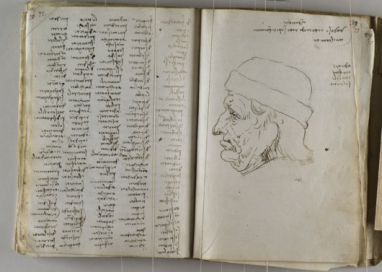
Bank of America Merrill Lynch Art Conservation Project finanzierà il restauro del Codice Trivulziano, uno dei primi manoscritti di Leonardo da Vinci, custodito presso la Biblioteca del Castello Sforzesco di Milano.
Il Codice Trivulziano, raccolta di disegni e scritti di Leonardo che comprende 55 fogli databili fra il 1478 e il 1490, è uno dei documenti più significativi del Rinascimento, oltre a rappresentare una testimonianza unica dell’eccezionale eclettismo leonardesco: contiene infatti note, ritratti e studi di architettura militare e religiosa, fra cui una serie di disegni per la cupola del Duomo di Milano, ma anche pagine di analisi della lingua italiana e osservazioni sulla letteratura del tempo.

STONE RESTORATION AT STELEA CURCH TÂRGOVIŞTE ROMANIA AFTER BIODEGRADATION OCCURRED DUE TO THE MODERNIZATION OF THE MONUMENT

STONE RESTORATION AT STELEA CURCH TÂRGOVIŞTE  ROMANIA AFTER BIODEGRADATION OCCURRED DUE TO THE MODERNIZATION OF THE MONUMENT

Veronica Burtea*, Oana Chachula**

* National University of Arts, Department of Conservation Restoration
(Questo indirizzo email è protetto dagli spambots. È necessario abilitare JavaScript per vederlo.
**National Museum of Romanian History / Centre of Research and Scientific Investigation (Questo indirizzo email è protetto dagli spambots. È necessario abilitare JavaScript per vederlo.)

Abstract
Stelea’ Monastery is a unique place from the architectural point of view. This monastery was built in the XVIth century and is located in “Tara Romaneasca”, a region in S of Romania. The church’s walls were degraded due to the weather in time. Therefore, a construction company started rebuilding in 2007. In consequence, all the windows from the churches were replaced with new ones made of double glazing. The company did not replace the windows correctly, in
other words, they used various materials which did not provide an excellent isolation. This lead to the formation of various size wholes. Therefore, the water could penetrate much easier. Since the humidity in the church increased considerably, the overall effect was the apparition of fungi. This paper presents the biological consequences, which can occur due to the inadequate use of double glazing. Additionally, it also draws the attention regarding the techniques used. This methods can have a disastrously effect on the mural paintings. Since these pictures are very old, they have to receive a special attention.
{flippingbook_book 27}

SELECTION OF MICROBIAL STRAINS FOR THE DEVELOPMENT OF A BIOCLEANING PROCEDURE FOR SHELLAC REMOVAL FROM ARTWORK SURFACES

SELECTION OF MICROBIAL STRAINS FOR THE DEVELOPMENT OF A BIOCLEANING PROCEDURE FOR SHELLAC REMOVAL FROM ARTWORK SURFACES

Nicoletta Barbabietola*, Chiara Alisi*, Flavia Tasso*, Michela Grimaldi*, Salvatore Chiavarini*, Carla Ubaldi*, Paola Marconi*, Brunella Perito**, Anna Rosa Sprocati* * ENEA Casaccia, Rome, Italy (Questo indirizzo email è protetto dagli spambots. È necessario abilitare JavaScript per vederlo.)
** University of Florence, Italy

Abstract
The use of biotechnology is quite well developed in many fields, whereas in the art and restoration domain it is scantly applied. In this field biotechnological procedures could be useful to integrate rather than replace conventional chemical-physical restoration procedures, when these are ineffective or toxic for end-users and for the environment. Microorganisms, which are usuallyrelated to biodeterioration, can represent, on the other hand, a source for the development of new biotechnological solutions for restoration and conservation. In the present paper the use of selected bacterial strains for the removal of shellac resin from artworks’ surfaces was investigated. Shellac, a natural organic resin of animal origin, has been largely used as a fixative for wall paintings, due to its good penetration and adhesion features; when exposed to environmental factors it loses its elasticity and mechanical strength and, by ageing, it becomes hard and insoluble, making the painting matt. The traditional cleaning procedures are ineffective in the removal of aged shellac, as is well documented by the case of the Ajanta caves. In this case a biological approach could usefully integrate the chemical procedures to complete the removal without damaging both the artwork as the operators safety. Tirthytwo
strains, isolated from the Etruscan tomb of Tarquinia or from contaminated environmental matrices, were selected for their capacity of oxidizing shellac as substrate, by means of BIOLOG TM system methodology. Three of these strains showed to be the most effective and were tested for the capability to use the target substrate as sole carbon source: CONC 11 (Pseudomonas stutzeri), CONC 18 (Achromobacter xylosoxidans ) and LAM 21 ( Acinetobacter calcoaceticus). To check the effectiveness of the shellac degradation and the presence of undesired by-products, the microbial transformation of shellac resin was monitored by GC-MS. GC-MS analyses identified butolic acid as a marker for the molecular pattern recognition of the resin. Gas-mass analyses showed variations in shellac composition after 1 day of incubation with the selected
strains and, after 3 days, the concentration of butolic acid was reduced by more than 80%, in correspondence to the plateau of the growth curve. Work is in progress to understand if other components of shellac are also undergoing microbial transformation. To carry out in vivo tests for bio-removal of aged shellac, specimens of wall paintings were purposely prepared, spreading three different pigments (kaolin, cinnabar and indigo) diluted inthree organic media (rabbit glue, linseed oil and arabic gum) over a thin plaster layer. Specimens
were then incubated in a climatic chamber with 96% R.H. and 34°C, to simulate climatic conditions similar to Ajanta caves. At the end of the weathering period, specimens will be treated with a bacterial suspension in order to check its capability to remove the shellac film. Bacterial strains will be tested in different combinations and successions, in order to develop tailor-made microbial formulas and procedures, for specific restoration requirements.
{flippingbook_book 26}

ELECTRICAL MEASUREMENTS FOR THE EVALUATION OF WATER PRESENCE IN STONES

ELECTRICAL MEASUREMENTS FOR THE EVALUATION OF WATER PRESENCE IN STONES

Fabiana Consalvi*, Giovanni Ettore Gigante**, Franco Meddi**

* Università degli Studi di Firenze, Italy (Questo indirizzo email è protetto dagli spambots. È necessario abilitare JavaScript per vederlo.)
** “Sapienza” Università di Roma, Italy

Abstract
This study deals with the use of a non-invasive measuring system, the presence of moisture inside objects of interest for the cultural heritage. The study has principally focused on certain types of stones, however, this analytical method can be employed in many other fields, such as the building sector in general.
A method based on Direct Current Resistivity (DCR: Direct Current Resistivity) measurement through four aligned electrodes on the sample surfaces is proposed to obtain a wetlands mapping at various depths of investigation. To achieve this purpose have been built several electrodes contact devices in conformity with the Wenner array and optimized for their reliably and nondestructive application on rigid surfaces.
{flippingbook_book 25}

CONTRIBUTION OF TOTAL SUSPENDED PARTICULATE (TSP) TO THE FORMATION OF BLACK CRUSTS ON BUILDING MATERIALS IN URBAN ENVIRONMENTS OF SICILY (ITALY)

CONTRIBUTION OF TOTAL SUSPENDED PARTICULATE (TSP) TO THE FORMATION OF BLACK CRUSTS ON BUILDING MATERIALS IN URBAN ENVIRONMENTS OF SICILY (ITALY)

Luciana Randazzo*

* University of Palermo, Italy (Questo indirizzo email è protetto dagli spambots. È necessario abilitare JavaScript per vederlo.)

Abstract
The blackening of building material surfaces constitutes one of the major stone decay processes to be faced in the field of conservation of the Cultural Heritage. In this context, the increasing requirement to preserve the monumental and historical heritage put forward to consider the economic advantages in applying preventive actions instead of expensive restoration interventions. This contribution has been focused on the weathering agents that caused permanent damages of the historical buildings in Palermo and Catania, that are the biggest towns of Sicily, representing a fitting example of the “coastal Mediterranean city” where pollution due to road traffic prevails on industrial emissions. In order to discriminate between natural and anthropogenic contribution to the processes of stone decay, TSP (Total Suspended Particulate) and black crusts were sampled in both the urban areas and subjected to mineralogical, chemical and isotopic analyses. Samples were analysed by means of X-ray diffractometry (XRD), Fourier transformed infrared spectroscopy (FTIR), observation of thin sections through the polarizing microscope (MO), micro-morphological and chemical analysis through Scanning Electron Microscopy (SEM), dosing of soluble salts by liquid chromatography (IC) and measures of 34S/32S by mass spectrometry (MS). The chemical and isotopic characterization of TSP, with some insights into the identification of the main sources, has been obtained. Air quality in the urban area of Palermo is mainly due to vehicle exhaust emissions while Catania episodically also suffers the presence of Mt. Etna. The investigation demonstrates also how composition of black crusts reflects that of the atmospheric combustion sources. The data obtained can provide useful indications for a correct partitioning of pollutant sources and the identification of the threshold levels required for a sustainable protection and conservation of the Cultural Heritage.
{flippingbook_book 24}

LASER ABLATION COUPLED TO MASS SPECTROMETRY (LAMS) APPLIED TO THE CULTURAL HERITAGE

LASER ABLATION COUPLED TO MASS SPECTROMETRY (LAMS) APPLIED TO THE CULTURAL HERITAGE

Alfio Torrisi*, Lorenzo Giuffrida**,***, Francesco Caridi****, Tiziana Serafino*****, Eligio Daniele Castrizio******, Guglielmo Mondio*****, Lorenzo Torrisi**

* Dipartimento di Fisica, University of Catania, Italy (Questo indirizzo email è protetto dagli spambots. È necessario abilitare JavaScript per vederlo.)
** Dipartimento di Fisica, University of Messina, Italy 
*** INFN-LNS of Catania, Italy
**** Facoltà di Scienze M.F.N., University of Messina, Italy 
***** Dipartimento di Fisica della Materia e Ing. dei Mat., University of Messina
****** Dipartimento Scienze dell’Antichità, University of Messina, Italy

Abstract
A Nd:Yag pulsed laser (3 ns pulse duration, 532 nm wavelength, 15-150 mJ pulse energy, 1-10 Hz repetition rate) is employed to irradiate ancient bronze coins placed in vacuum (10-6 mbar). During Laser Ablation a Mass Quadrupole Spectrometry (MQS) permits to detect the ablated masses from the sample surfaces with less than 1 amu mass resolution, in a range of 1-300 amu,
with a sensitivity of the order of 1 ppm. Coins from IV – X century A.D. coming from different Mediterranean sites (Egypt, Greece and Italy) are ablated, in a controllable manner to remove about 1 mm per laser shot from 0.5 mm2 spot size. During laser ablation the removed atomic and molecular species are analyzed with MQS relatively to the elemental composition, chemical compounds and isotopic species. The elements of interest are those of the surface and bulk composition, preliminary checked out through XRF analysis. The chemical compounds concerns the main species of the patina and of the first bulk layers. Pb isotope ratios measurements on the lead contents in the coin patinas have been compared with literature. The used technique, the obtained measurements and the result correlations are presented and discussed.
{flippingbook_book 23}

Registrazione testata

Archeomatica.it è una testata telematica registrata in data 5 marzo 2026 al n. 28/2026 del Registro Stampa del Tribunale di Roma. Direttore Responsabile: Michele Fasolo.